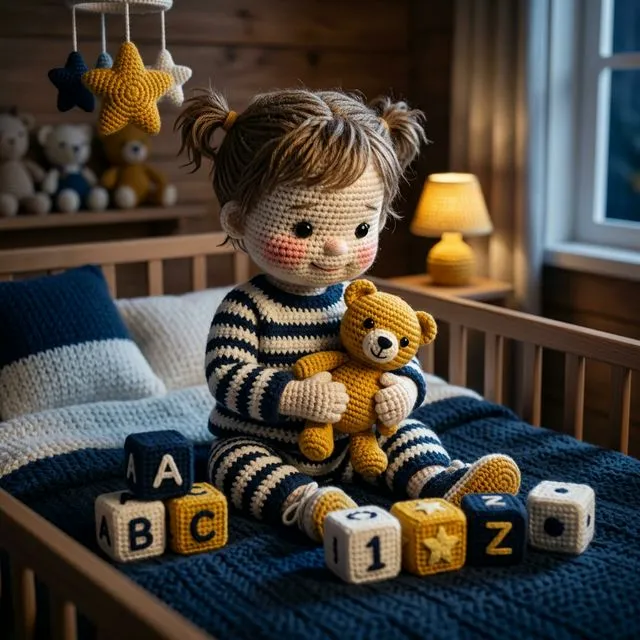
At three, many children enjoy simple stories with familiar characters and predictable endings. Start with what your child likes and can follow. Their response matters more than the age label on a recording.
Choose one clear idea
Try a story with a small cast and one main activity. For example, a little bear puts three toys away, chooses a book with a parent and climbs into bed. Repeating “one more thing is ready” after each step gives the listener something recognisable to return to.
That is an example premise, not a required formula. Your child might prefer a train returning to its station or a bird settling in its nest. Keep the sequence easy to follow.
Preview anything tense
Check for separation, chasing, monsters and sudden sound effects. A happy ending does not tell you how a child will feel about everything before it. If a character becomes frightened, listen to how the story handles that feeling.
If your child asks worried questions afterwards, pause and listen. You can choose a different story next time; the guide to scary stories at bedtime explains what to notice.
Keep choosing manageable
Offer two familiar options. If your child asks for the same one again tomorrow, there is no need to introduce a new story simply for variety. You can explore new books together when there is more time during the day.
A short recording or book is a useful starting point. If it is too long for the evening, find a shorter choice rather than expecting your child to accept an abrupt stop at the most interesting moment.
Let the story be part of time together
Set any timer before you start and keep the device out of reach with the display off. You can listen beside your child, hold hands or read aloud instead.
If your child needs you nearby, stay while they settle. A timer stops the recording; it does not decide when a child is ready for you to leave. If they want to talk, hear what they need before returning to the usual bedtime steps.